
Factory
Manufacturing & Quality Control
How a mirror is made, tested and packed before it reaches a container.

Process
A mirror looks like a simple product and is not. Between raw float glass and a packed carton there are nine controlled steps, and a failure at any of them shows up months later as a black edge, a fogged crescent, a flickering driver or a cracked panel in a container.
- Glass selection — standard float or low-iron substrate, 2 mm to 6 mm depending on the model and whether the panel will be tempered.
- Cutting — CNC straight cutting for rectangular work, waterjet for shaped and custom profiles.
- Edge work — grinding, seaming, arrising, and polishing or bevelling. On shaped panels this includes the concave sections, which is the step most often skipped.
- Tempering — for gym, studio and commercial panels, done before silvering because mirror glass cannot be tempered afterwards.
- Silvering — silver layer, protective layers and paint system; copper-free and lead-free on the eco range.
- Backing — CAT I or CAT II safety backing where specified, and sealed perimeter treatment on wet-area products.
- Electrical assembly — LED strip placement, driver, demister pad bonding, touch sensor calibration and wiring, on lit models.
- Test — full-function test on every lit unit; aging test on a sampled batch; insulation and earth continuity checks on hard-wired products.
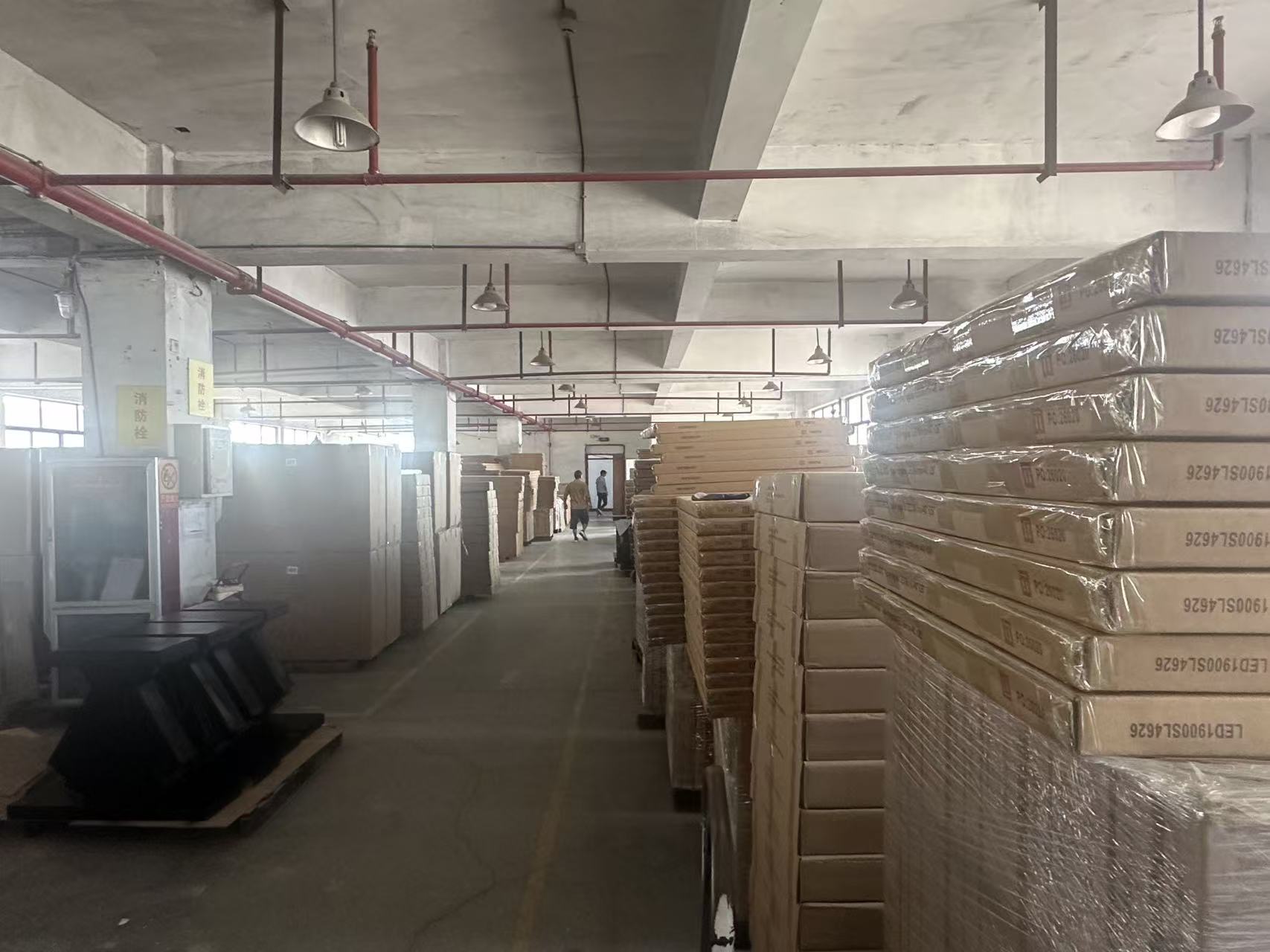
- Packing — EPE, honeycomb board and five-layer carton, or a vertical timber crate for large panels; packed-carton drop test against the ISTA 3A profile.
Inspection Points
| Stage | What is checked | Criterion |
|---|---|---|
| Incoming glass | Thickness, flatness, inclusion count | Per batch, against the purchase specification |
| After edge work | Dimension, edge finish, concave sections | +/- 1.5 mm; no chips, no unpolished sections |
| After silvering | Coating uniformity, pinholes, edge seal | Visual at 600 mm under standard lighting |
| Electrical assembly | Function, brightness, CCT, demister, touch response | 100% of lit units |
| Aging test | Continuous operation | Sampled batch, 24 hours minimum |
| Packed carton | Drop, vibration, compression | ISTA 3A profile |
Documentation Issued With Shipments
- Supplier RoHS and REACH material declarations for the product family.
- Tempering certificate for tempered panels.
- Backing classification certificate for CAT I and CAT II panels.
- UN38.3 test report and MSDS for lithium-battery products.
- Mounting details, rough-in dimensions and tilt geometry drawings where the model requires them.
- Numbered cut schedule and shop drawing on custom-cut project work.
Certification We Can Arrange
We are the factory, so certification is a service we run against your order, not a badge we already hold. Tell us the target market and the channel requirement; we quote the scope, cost and lead time, send samples, work with the lab and follow up on any corrections.
- Test-report based — CE (LVD and EMC), RoHS, REACH, FCC SDoC, ISTA transit testing. Samples go to a lab; budget weeks, and a cost per product family rather than per SKU.
- Listing with a factory audit — UL, ETL, SAA, PSE and similar. These test the finished product and audit the plant, with ongoing follow-up inspections, and the certificate is tied to the audited factory. Budget months, not weeks.
- Factory-level social audits — BSCI, SEDEX. These audit the facility itself and cannot be arranged per order. Tell us at quotation stage and we allocate your models to a plant that already holds one.
Two things we state up front, because they are what these negotiations actually turn on:
- The certificate is issued in your name. You fund the testing and you hold the certificate — which also makes you the responsible party in your market. This is the normal ODM arrangement, and it means the certificate stays with you if you ever change supplier.
- We supply the technical file. A Declaration of Conformity is only worth signing if the file behind it exists: bill of materials, electrical schematics, test reports, risk assessment and instructions. That file has to come from the factory, and most cannot produce it.
One practical note for the EU: the importer's name and address must appear on the product or its packaging. We print it as part of your labelling spec.
Factory Audits
We welcome third-party and customer audits, and we will arrange a video walkthrough within two working days for buyers who cannot travel. If your program requires a social compliance audit such as BSCI or SEDEX at a specific partner factory, tell us at quotation stage so the model is allocated to a facility that already holds it rather than to one that would need to obtain it.